Design the landing before taking the leap.

A six-phase framework for moving from operational reality to adopted, measurable improvement. Designed for complex change and flexible enough to fit each organisation.

One connected path from observation to evidence.

The depth of each phase changes with the engagement. The sequence remains stable so discovery, decisions, implementation and ownership stay connected.

Loop reveals the real route through Tangle's knotted process
S

See the system

What actually happens?

We observe work and map systems, data, rules, exceptions and hand-offs—not only the official procedure.

  • Current-state map
  • Issues and risk register
  • Baseline plan
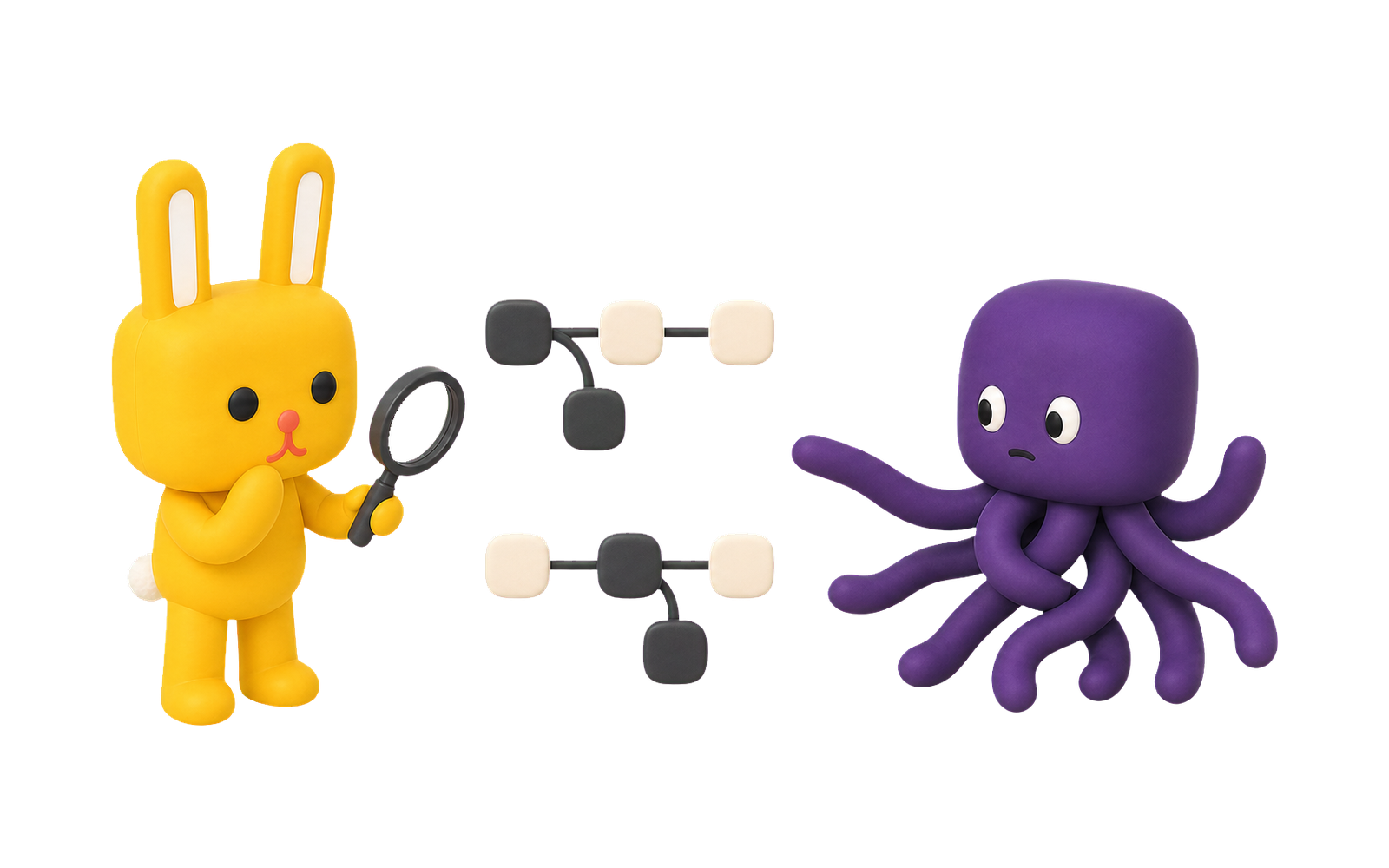
Loop and Tangle inspect an inherited crossing before deciding what should change
Q

Question the defaults

Why does it happen this way?

We test inherited rules, duplicated work, controls and assumptions to find root causes and the right problem to solve.

  • Assumption ledger
  • Root-cause view
  • Prioritised opportunity map
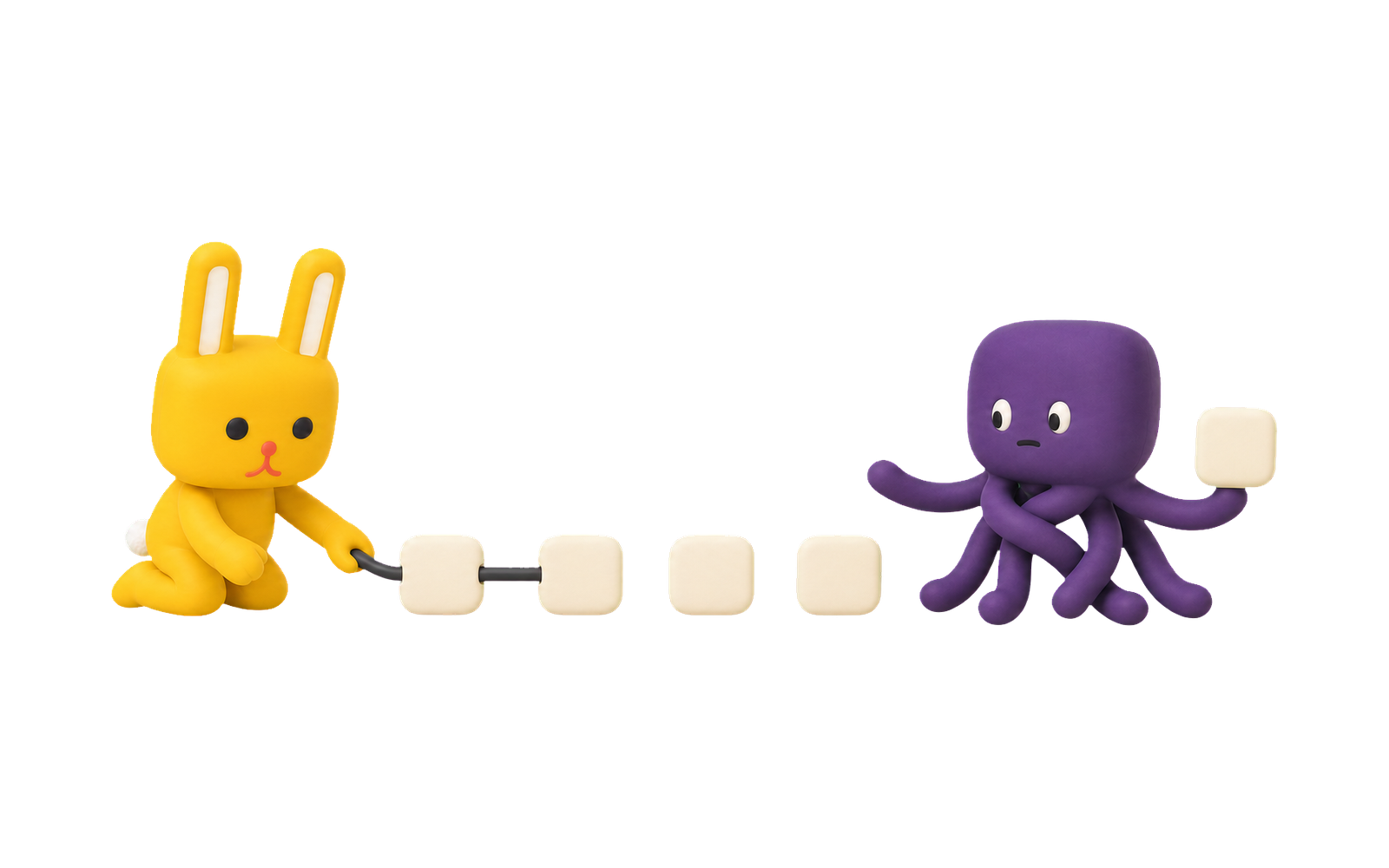
Loop and Tangle release duplicated loops while keeping necessary controls
U

Unblock the work

What should work differently?

We simplify before automating and redesign decisions, roles, hand-offs and controls around a clearer future state.

  • Future-state blueprint
  • Ownership model
  • Outcome hypotheses
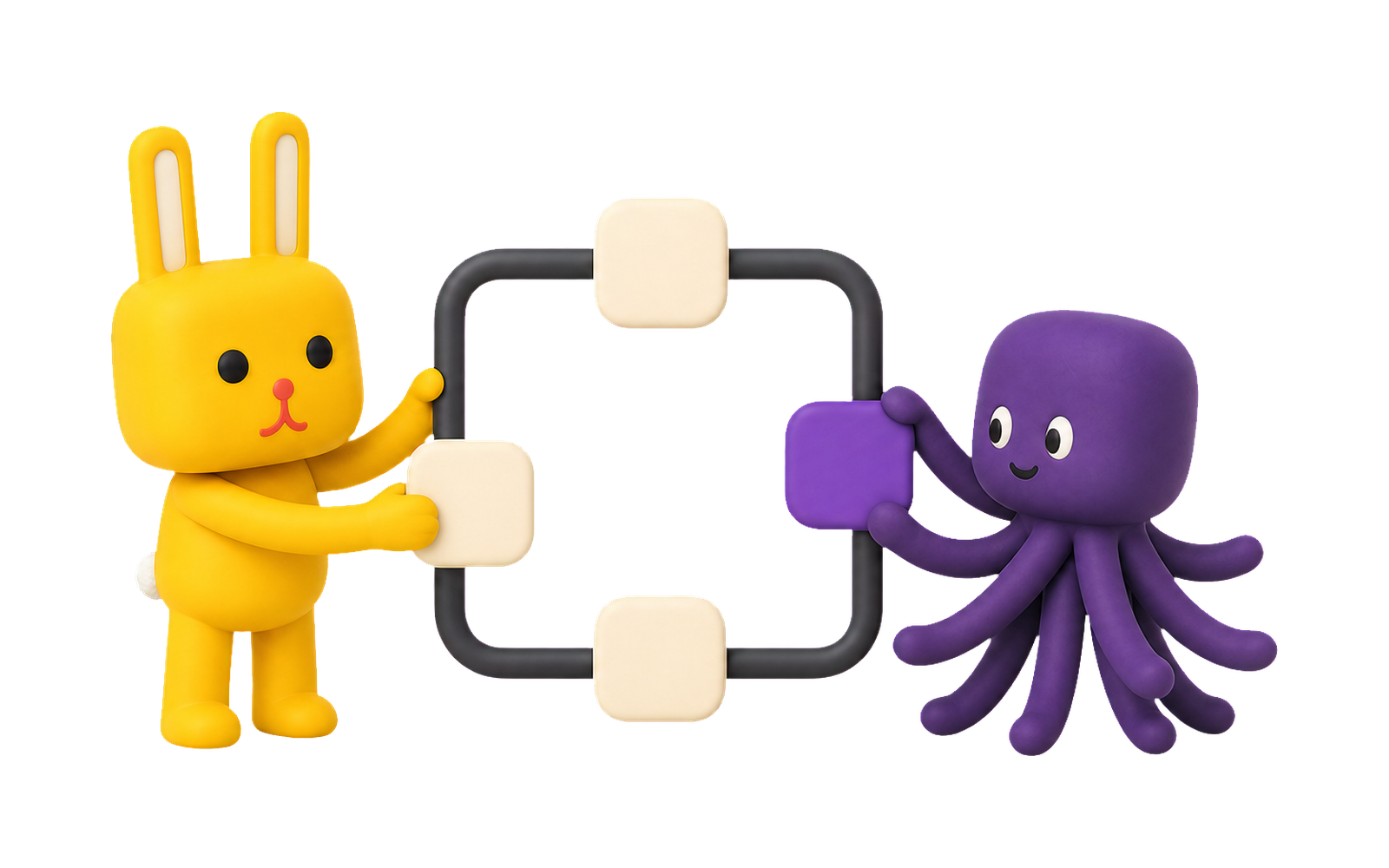
Loop and Tangle arrange process routes and technology into a clear architecture
A

Architect the change

What should technology do—and not do?

We define the role of software, integration, automation and AI, including data, security, governance and delivery choices.

  • Solution architecture
  • Prototype or concept
  • Delivery and risk plan
Loop and Tangle run a real case and route one exception through the new system
R

Run it for real

Does it work in real conditions?

We implement, integrate, test and pilot with real work and real users before a broader rollout.

  • Working release or pilot
  • Acceptance evidence
  • Operating playbook
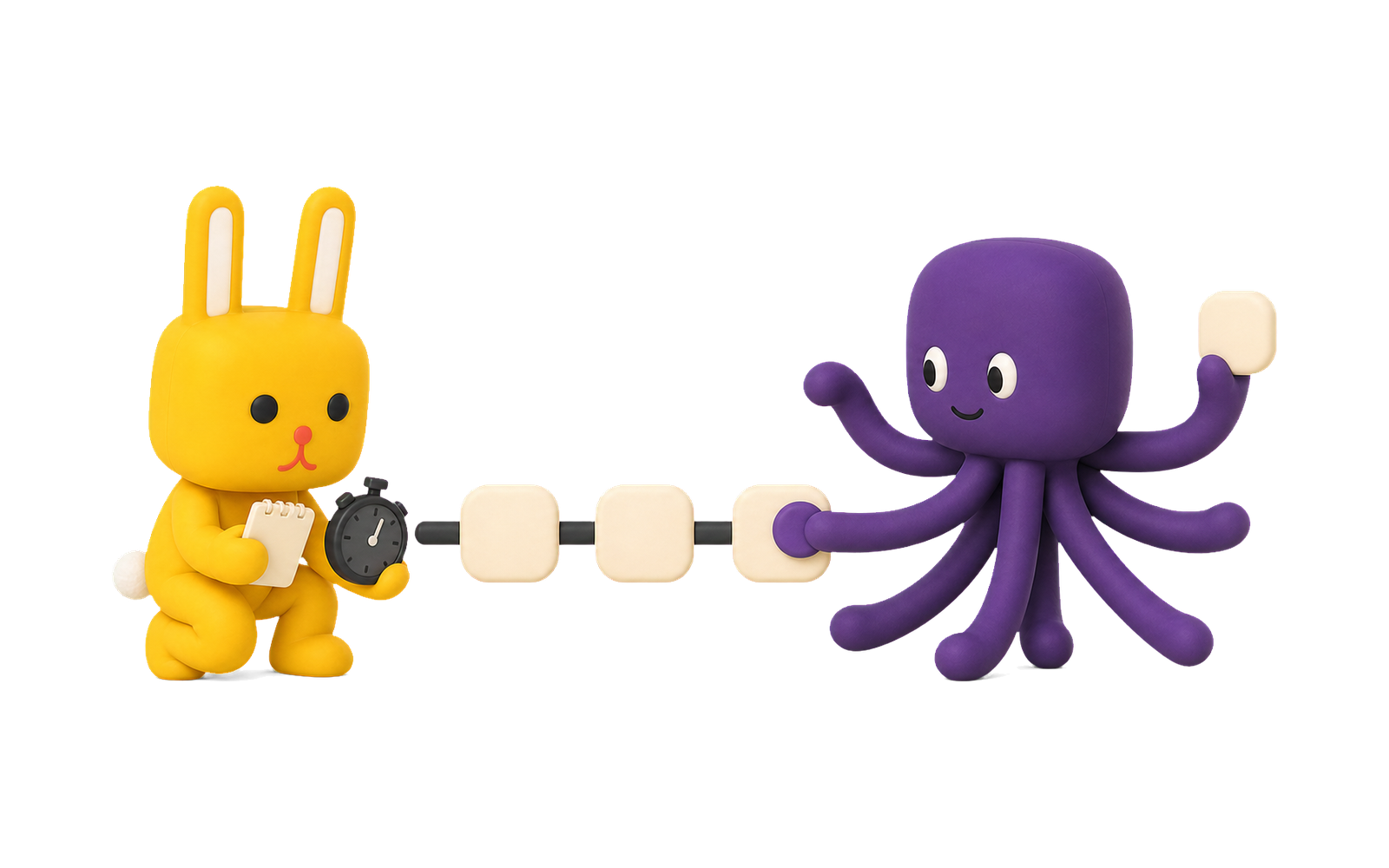
Loop and Flow-state Tangle review evidence and improve the route together
E

Evolve by evidence

What should improve or scale next?

We compare results with the baseline, gather feedback and establish ownership for continued improvement.

  • Performance review
  • Improvement backlog
  • Scaling roadmap

Every phase makes four things explicit: what we learned, what we decided, who owns the next step and how improvement will be measured.

Close enough to understand. Practical enough to change.

We begin with a business conversation, then move into the organisation to understand the process in context. The shape of the engagement follows the challenge, not a fixed consulting package.

Bring us the process everyone has learned to live with.

Tell us where work slows down, creates unnecessary effort or depends too heavily on workarounds. A rough description is enough to begin.